Reading List
This is a list of books I’ve read and enjoyed enough to recommend, grouped by the year I read them, starting with the most recent.
If you’re wondering how I find the time to get through this many books, the answer is that I don’t really read most of them; I listen to them as audiobooks during my commute. It turns an otherwise dead part of the day into something I genuinely look forward to.
2026

Following the format of her bestselling Nuclear War, Annie Jacobsen draws on dozens of interviews with political, medical, and military experts to trace how a lab accident or bio-attack could spiral into a global pandemic and the collapse of society within days.

James Gleick follows the history of information and communication, from Africa’s talking drums and the first alphabets to telegraph codes, Claude Shannon’s information theory, and today’s data deluge, profiling innovators such as Babbage, Lovelace, and Morse along the way.

Ashlee Vance follows four scrappy companies (Astra, Firefly, Planet Labs, and Rocket Lab) as they race to make rocket and satellite launches fast and cheap, opening low Earth orbit to a new space economy.

Washington Post reporter Eva Dou traces the rise of Huawei and its secretive founder Ren Zhengfei, drawing on interviews and archival research to examine the telecom giant’s growth and its tangled ties to China’s security state.

With extensive access to Demis Hassabis and DeepMind, Sebastian Mallaby chronicles the Nobel laureate’s path from chess prodigy to AI leader, covering DeepMind’s breakthroughs, the debates over AI safety, and its rivalry with OpenAI in the race toward AGI.

Oxford philosopher and effective altruism cofounder William MacAskill argues that good intentions are not enough, and lays out a data-driven approach to choosing charities, careers, and causes that do the most good.

Wall Street Journal reporter Keach Hagey traces Sam Altman’s path from his St. Louis childhood through Y Combinator to OpenAI, drawing on more than 250 interviews to portray a risk-loving dealmaker driven by conviction in technological progress.

French political scientist Asma Mhalla argues that Big Tech now operates as a parallel sovereignty, with digital platforms, AI systems, and attention capture becoming instruments of political control that push Western democracies toward a new, technologically mediated form of totalitarianism.
2025

Yudkowsky and Soares argue that a sufficiently advanced artificial superintelligence would pursue goals at odds with humanity and destroy us, walking through their reasoning, a possible extinction scenario, and a call to halt frontier AI development.

Ezra Klein and Derek Thompson argue that liberal governance has come to favor process and blocking over building, and make the case for a “politics of abundance” aimed at producing more housing, infrastructure, and clean energy.

Michael Lewis’s close-range portrait of Sam Bankman-Fried, charting the dizzying rise and collapse of the FTX crypto empire from inside the room.

A character-driven narrative history of the 1929 Wall Street crash, its speculative build-up, and its aftermath, showing how ambition, leverage, and greed collided to help trigger the Great Depression.

A sweeping history of risk, from ancient dice games to modern derivatives, and the thinkers who learned to measure and tame uncertainty. A classic for anyone working in finance.

Harari traces the history of information networks from ancient myths to artificial intelligence, exploring how the way societies create and share information has shaped (and could destabilize) our future.

James Gleick’s classic account of the birth of chaos theory: the researchers who discovered that simple systems can behave unpredictably, and the strange attractors, fractals, and “butterfly effects” that revealed hidden order in apparent randomness.

Walter Isaacson’s biography of Nobel laureate Jennifer Doudna and the discovery of CRISPR, tracing the race to harness gene editing and the profound ethical questions raised by our new power to rewrite the code of life.

Physician Gabor Maté reframes attention deficit disorder not as a purely genetic defect but as rooted in environment and early development, drawing on his own experience to offer a compassionate path toward healing.

Annie Jacobsen reconstructs, minute by minute, how a nuclear war could unfold once the first missile launches, drawing on interviews with military and government officials to show how little stands between us and catastrophe.
2024

Astrobiologist Sara Imari Walker argues that explaining life (and recognizing it elsewhere in the universe) requires a new physics, and makes the case for “assembly theory,” which measures how much selection and history an object embodies.

An Audible Original in which Michael Lewis examines the value of weather data, the people who gather it, and what’s at stake when the government agencies behind America’s forecasts are weakened or handed to private interests.

An Audible Original where Michael Lewis turns a personal lens on the all-consuming culture of competitive youth sports, drawing on his own family’s experience to ask what it really costs to win.

Social psychologist Jonathan Haidt argues that the shift from a play-based to a phone-based childhood is driving a surge in adolescent anxiety and depression, and lays out what parents, schools, and tech companies can do about it.

The story of reclusive mathematician Jim Simons and how his firm, Renaissance Technologies, cracked the markets with data and algorithms, pioneering the quantitative trading that reshaped Wall Street.

A deeply reported account of the rise and collapse of Washington Mutual, the largest bank failure in U.S. history, told through the executives and regulators who lived it.
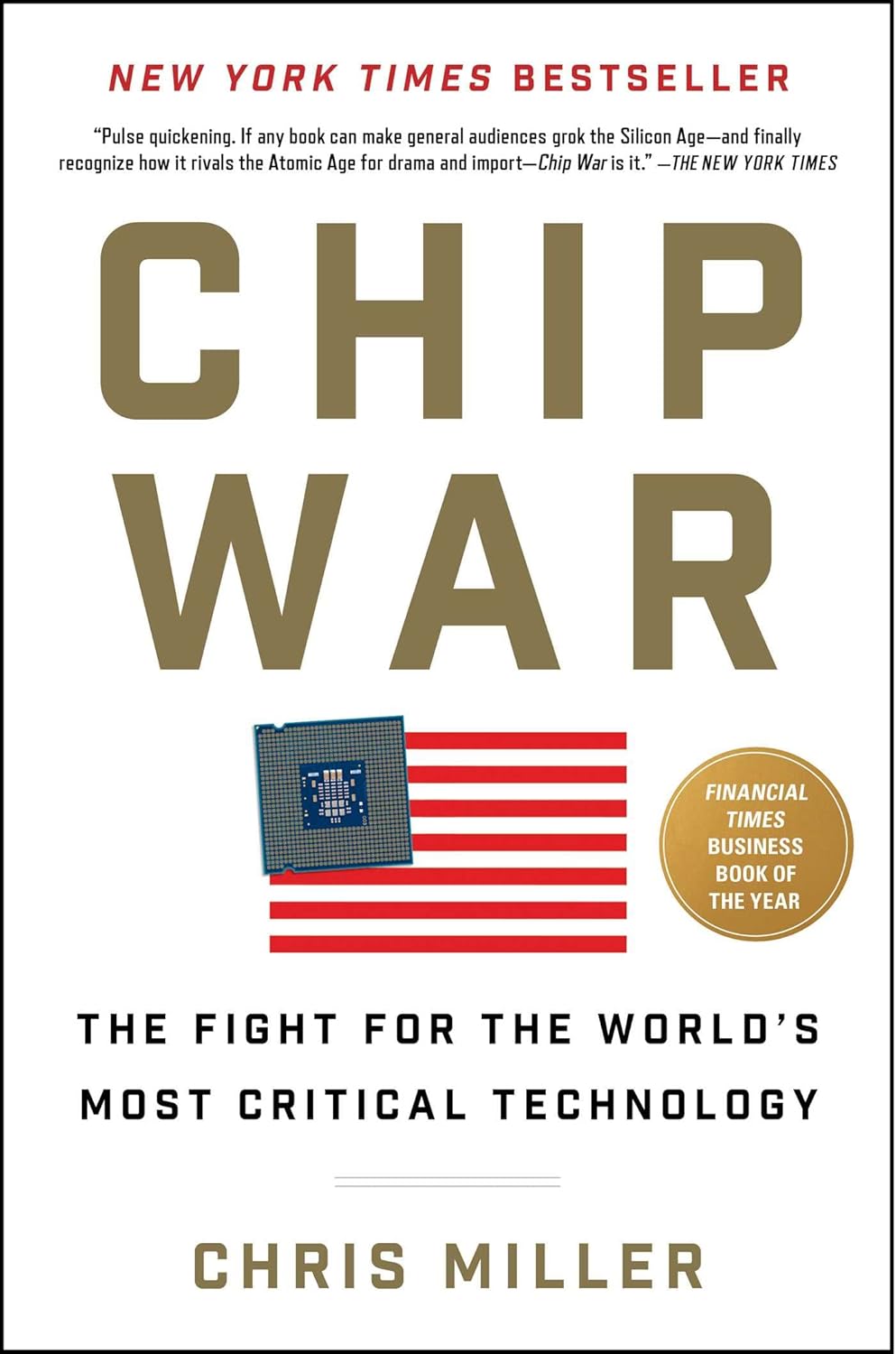
A gripping history of the semiconductor, the tiny chip behind modern computing, and the escalating geopolitical contest between the United States and China to control who makes it.

Tiago Forte’s practical system for capturing and organizing the information you encounter so that your notes become a reliable “second brain” that powers your creative work.

Performance coach Steve Magness dismantles the old, bravado-driven model of toughness and draws on science to show what genuine resilience looks like and how to build it.

Cal Newport makes the case for a calmer, more sustainable approach to knowledge work: doing fewer things, working at a natural pace, and obsessing over quality rather than busyness.

DeepMind co-founder Mustafa Suleyman warns that AI and synthetic biology form an unstoppable wave of world-changing (and potentially dangerous) technology, and argues that learning to contain it is the defining challenge of our century.

Jeff Goodell examines what a hotter planet does to the human body and the systems we depend on, weaving science and reporting into a stark account of extreme heat as one of climate change’s most underestimated threats.

Physician Peter Attia lays out a proactive approach to longevity he calls “Medicine 3.0,” focused on extending healthspan (the years lived in good health) through exercise, nutrition, sleep, and emotional well-being.